For our monthly April meeting we had Becky Masterman speaking about splitting Hives and several other topics. She explained the differences and an overview of different types of splits including:
Normal splits – The “normal” or traditional method of splitting bees typically involves the beekeeper locating the queen and manually dividing the colony into two or more new hives. Each new division receives a roughly equal share of bees, brood (eggs, larvae, and capped brood), honey, and pollen. Crucially, one of the new hives will contain the original queen, while the other(s) will either be given a new, mated queen or allowed to raise their own queen from young larvae.
Walk Away Splits – The “walk away” split is a straightforward method of dividing a bee colony without needing to locate the queen. 1 You essentially split the existing hive into two, ensuring that each new division contains frames with eggs and young larvae. The original queen will be in one of the splits (you don’t need to find her), and the queenless side will raise a new queen from the young larvae. You then “walk away” and let the bees sort things out.
Run Away splits – The “Run Away” split, also known as a nucleus box split, is a method where you take a small box (nucleus hive) containing frames of bees, brood, and honey and place it on top of the original hive, separated by a queen excluder. After a period, the queen will be below the excluder, and the bees above will realize they are queenless and start raising emergency queens. You then move the nucleus box to a new location, leaving the original hive with its queen.
Demaree method – The Demaree method is a swarm prevention technique that involves temporarily separating the queen and most of the worker bees from the majority of the brood by using queen excluders and rearranging hive boxes. 1 This creates the illusion of a swarm, reducing congestion and the swarming impulse while keeping the colony intact for honey production
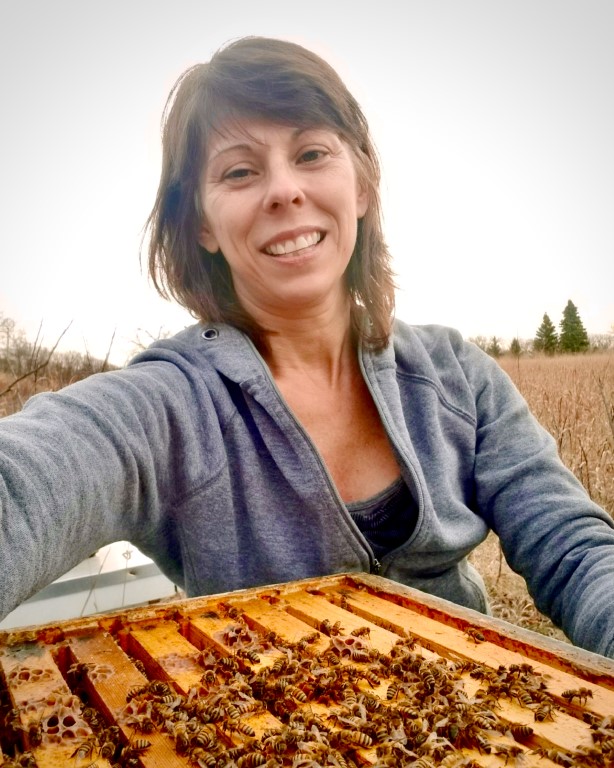
Rebecca Masterman first worked for the UMN Bee Lab as an undergraduate in 1992, and returned in 2012 as the Bee Squad’s Associate Program Director and Coordinator. Becky graduated from UMN Twin Cities with a BA (major in history, minor in biology) and then obtained a Ph.D. in Entomology studying the neuroethology of honey bee hygienic behavior under the direction of Dr. Marla Spivak.
She has a weekly podcast you can find out more here
https://www.beekeepingtodaypodcast.com
There are a lot of episodes Season 6 Episode 36 is a getting started in beekeeping series that might be a good place to start
We had some questions about the Varroxsan treatment that she was going to try you can find them at most Bee Keeping Supply websites
She mentioned the U of M Beekeeping in Northern Climates you can find it here